
Backstage
Lead frontend on a white-label ticketing platform for international touring DJs, built from nothing to production on top of the Pretix ticketing framework — branded storefronts, an identity-bound checkout, and the console the promoter runs the night from.
- Role
- Lead frontend — Antártida
- Period
- 2023 — 2025
- Type
- Client work
- Status
- production
- 9
- Steps to an issued ticket
- 10
- Ticket types on one night
- 2
- Years owned end to end
- 0
- Ticketing engines rebuilt
Walkthrough
- 01Branded event page — line-up, venue, age limit, price from
- 02Account: sign in, or register
- 03Profile: name, date of birth, nationality, ID number
- 04Phone verified by SMS code
- 05ID document photographed, front and back
- 06Tickets chosen against a ten-minute hold
- 07Service fee shown separately from face value
- 08Paid through Mercado Pago
- 09Ticket issued, and the clip ends on the door
Overview
I started this one from an empty repository and took it to production as lead frontend. It is the event and ticketing surface for internationally touring DJs — the page a fan lands on, the checkout they go through, and the ticket they hold at the door.
Rather than building a ticketing engine, it sits on top of Pretix and puts a white-label front on it: each promoter or artist gets their own branded storefront over shared ticketing infrastructure. That split is the whole architecture — Pretix owns inventory, orders and the parts you must never reimplement, and the frontend owns everything the audience actually sees.
Two audiences share the codebase. Fans get the storefront, the checkout and a wallet of tickets they can transfer. Promoters get a console on the same events: ticket types, RRPPs, clients, memberships, invoices and the sales report for the night. Nightlife ticketing in Latin America is also a fraud problem, so identity runs through the whole thing — a ticket is bound to a person, not to whoever has the screenshot.
I owned the frontend end to end, including maintenance after launch.
Architecture
One codebase, one brand at a time
Scroll to pan
Identity before inventory
Scroll to pan
Screens

Modules
White-label storefront
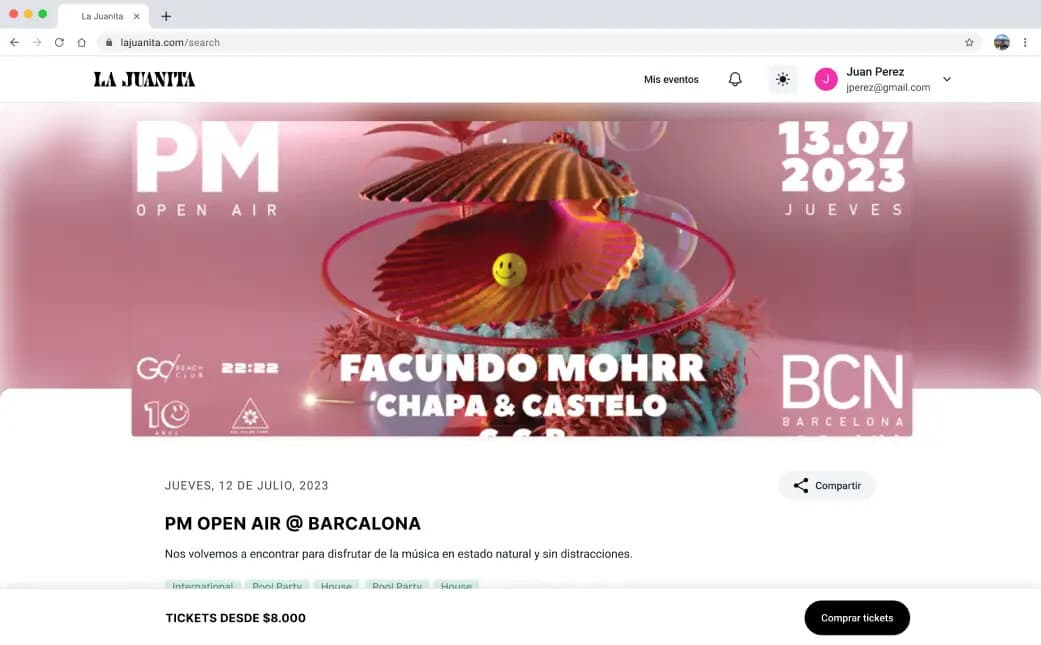
One codebase, many brands — each promoter’s events presented under their own identity, in both themes, without a fork per client.
- Wordmark, palette and typography as configuration
- Light and dark for every brand, not just the flagship
- Event page: line-up, venue, age limit, tags, share
- Sticky price bar so the cheapest ticket is always in view
Identity before inventory
Account, profile, SMS-verified phone and a photographed ID document — all of it collected before a single ticket is held, because a ticket in this product belongs to a named person.
Checkout on a clock
Ticket selection runs against a ten-minute hold, with the service fee shown apart from face value and payment handed to Mercado Pago. Everything slow was moved out of the window on purpose.
The ticket after the sale
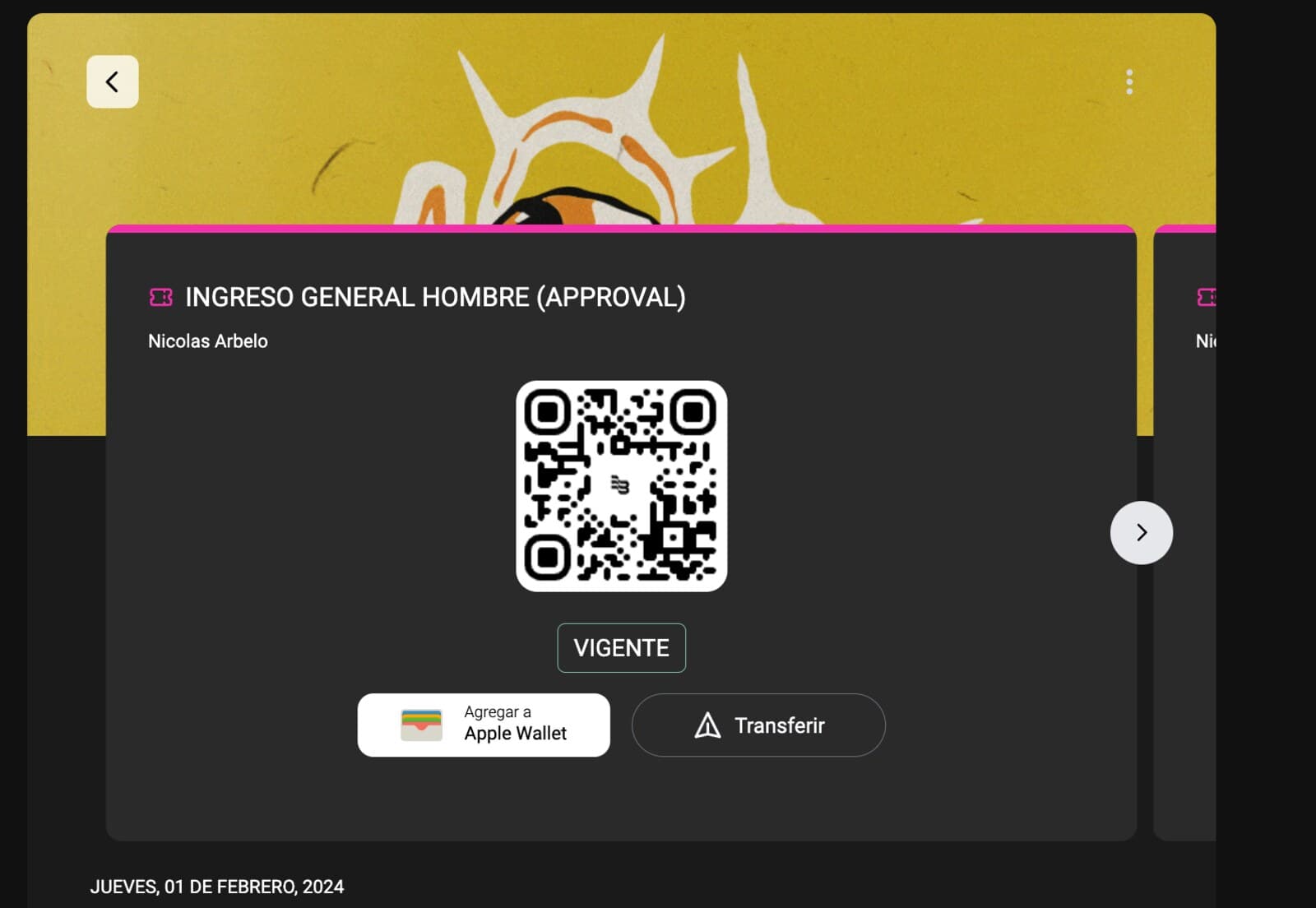
A QR bound to a holder, a live validity state, an Apple Wallet pass, and a transfer action — so a ticket changing hands is a recorded event rather than a forwarded screenshot.
Ticket types as pricing strategy
Early bird, three rounds of preventa, invitations, general admission, VIP standing and tables — ten-plus types on a single night, each with its own window, price and allocation.
Producer console
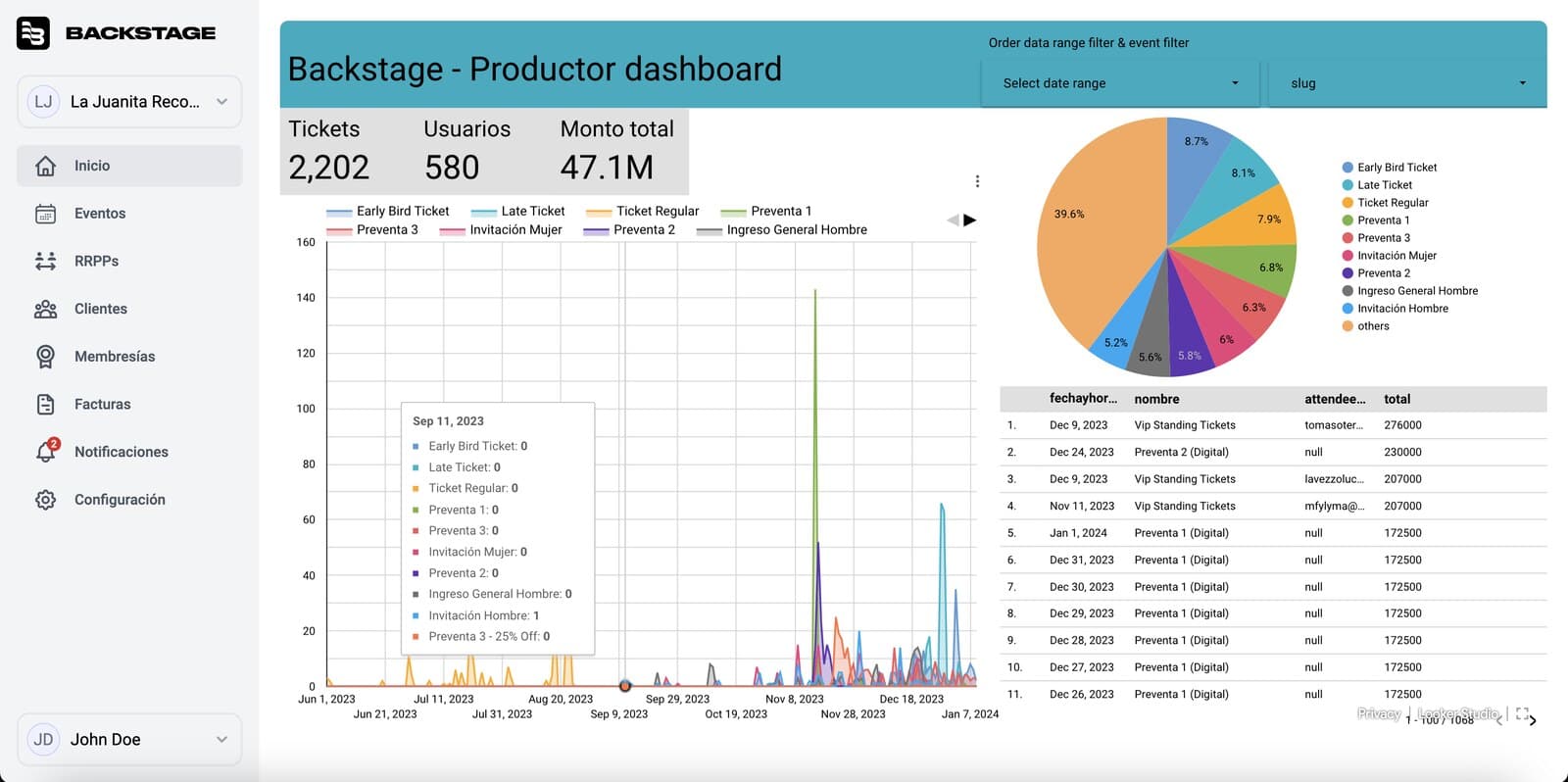
Where the promoter actually works: events, RRPPs, clients, memberships, invoices and notifications, with the sales report for the night embedded in the same shell.
Pretix integration
The ticketing framework underneath, handling inventory and orders while the frontend owns presentation and checkout flow.
Zero to production, then maintained
Set up the project, the frontend architecture and the conventions, then kept it running once real events were selling through it.
Engineering
The screenshot is the attack
A QR in a chat thread can be sold four times before anyone reaches the door, and the door is the worst possible place to discover it. The answer was to stop treating a ticket as a bearer token: an account, an SMS-verified phone and a photographed ID stand between a fan and a purchase, the ticket carries the holder’s name, and passing it on is a transfer inside the product rather than a forward outside it. Every one of those steps is friction added deliberately to a funnel, which is not a decision a frontend gets to make quietly.
Everything slow has to happen before the clock starts
Held inventory is the one thing a ticketing frontend cannot be relaxed about — the hold is ten minutes, and a fan who spends it photographing the back of their ID loses the ticket to someone else. So the flow front-loads: account, profile, phone code and document all resolve before ticket selection is reachable. The sequence looks like a long onboarding and is actually a scheduling decision.
One codebase that must never look like one codebase
A promoter’s storefront is their brand, so a shared platform that reads as a shared platform has failed. La Juanita is a serif wordmark and magenta; PM Open Air is a display face and cyan; both run the same components, the same checkout and the same wallet, in both light and dark. Theming is the easy half — the hard half is keeping a checkout flow identical enough to debug once, and different enough that nobody notices it is the same one.
Ten ticket types, one night, one screen
Nightlife pricing is not two tiers. A single event runs early bird, three rounds of preventa, gendered invitations, general admission, VIP standing and tables — each with its own window, price, allocation and rules about who may buy it. The interface has to present that without turning into a spreadsheet, and the promoter’s report has to break sales down by every one of them, because which round sold out and when is the whole business.
Analytics the promoter would actually open
The console needs sales over time, split by ticket type, with date and event filters — and rebuilding that as bespoke charting would have bought a maintenance burden and no advantage. Embedding a Looker Studio report inside the app shell put a full analytics surface behind the promoter’s own navigation, which is the sort of trade a lead frontend should be making rather than defending a hand-rolled chart library two years later.
Stack
- 01React
- 02Next.js
- 03TypeScript
- 04Tailwind CSS
- 05Pretix
- 06PostgreSQL
- 07Python
- 08Google Cloud
- 09Mercado Pago
- 10Apple Wallet
- 11Looker Studio